Simple bread baking: flour, water, salt, time
A loaf needs almost nothing it does not already carry. The recipe is mostly an arrangement with the day.
The bowl sat on the kitchen counter all night, covered with a damp cloth, gathering itself in the cool of the room. By morning the dough had nearly doubled. There was a small dimple near the centre where someone had pressed a finger before bed, and the dimple had filled in halfway. The cloth was lifted, a hand was floured, and the dough was tipped out onto the wooden board with a soft sigh.
That moment, repeated in millions of kitchens across thousands of years, is the practical heart of bread. Everything else, the kneading, the shaping, the oven, is detail around it. What matters is the slow life inside the bowl, and the cook who knows how to wait for it.
The four ingredients (and the fifth)
A simple loaf takes flour, water, salt, and a leavening agent. The leavening can be commercial yeast, a wild sourdough starter, or, for flatbreads, nothing at all. The flour can be wheat, rye, barley, or a mixture. The water is just water. The salt is just salt. There is nothing else strictly required.
The fifth ingredient is time. A bread made in two hours with a lot of commercial yeast will rise reliably and taste of yeast and warm crust, which is a real and good thing. A bread made over twelve or twenty-four hours with a small amount of yeast or a sourdough starter will rise more quietly and taste of flour, fermentation, and the small acids that develop slowly during the long rest. Both are bread. They are not the same loaf.
For most of human history, the long version was the default, simply because reliable strong yeast packets did not exist. A bit of dough from yesterday’s batch was kept aside to start tomorrow’s, and so on, in an unbroken chain of fermentation that some bakeries in Italy and France still claim, with reasonable accuracy, to be carrying forward from grandmothers, great-grandmothers, and earlier.
What the kneading does
The wet dough contains proteins (glutenin and gliadin in wheat) that, when worked, link up into long elastic strands. These strands are the gluten network. They are what allows a bread to trap the gases produced by fermentation and rise. A loaf made of flour with little gluten (rye, oats, ancient wheats) will rise less and have a denser, often more interesting crumb. A loaf made of a strong bread flour, well kneaded, will rise high and airy.
You do not necessarily need to knead aggressively. Modern home bakers, particularly those working with high-hydration doughs (lots of water relative to flour), often use a gentler method: a series of folds spaced over an hour or two, allowing the gluten to develop while the dough rests. A grandmother in a Tuscan kitchen, baking weekly for fifty years, might tell you the same thing in different words. You feel the dough change under your hands. It goes from sticky and shaggy to smooth and slightly bouncy. That is the moment.
“You do not own a dough. You only host it for a few hours.” (a baker in Sicily, on being asked how he could make so many loaves a day)
The slow rise, and what it gives back
During the bulk fermentation (the first rise, before shaping), several things happen at once. The yeasts (commercial or wild) eat the sugars in the flour, producing carbon dioxide and a small amount of alcohol. The carbon dioxide inflates the gluten network, which traps it. Meanwhile, enzymes in the flour break down some of the starches and proteins into smaller pieces, which gives the finished bread its flavour and aroma.
A short rise gives a simple bread. A long, cool rise gives a complex one. This is part of why a baker who learns patience develops better bread without changing the recipe. The flour, the water, the salt, and the yeast are the same. The time is different, and the time does most of the work.
This is also what links simple bread baking to the wider family of traditional food practices that depend on slow, biological work. The crock of fermented vegetables in the corner. The pot of curd setting on the counter. The bowl of sprouting grains by the window. Bread is part of that quiet kitchen ecology, not a separate skill.
Different breads from the same idea
The pane di campagna
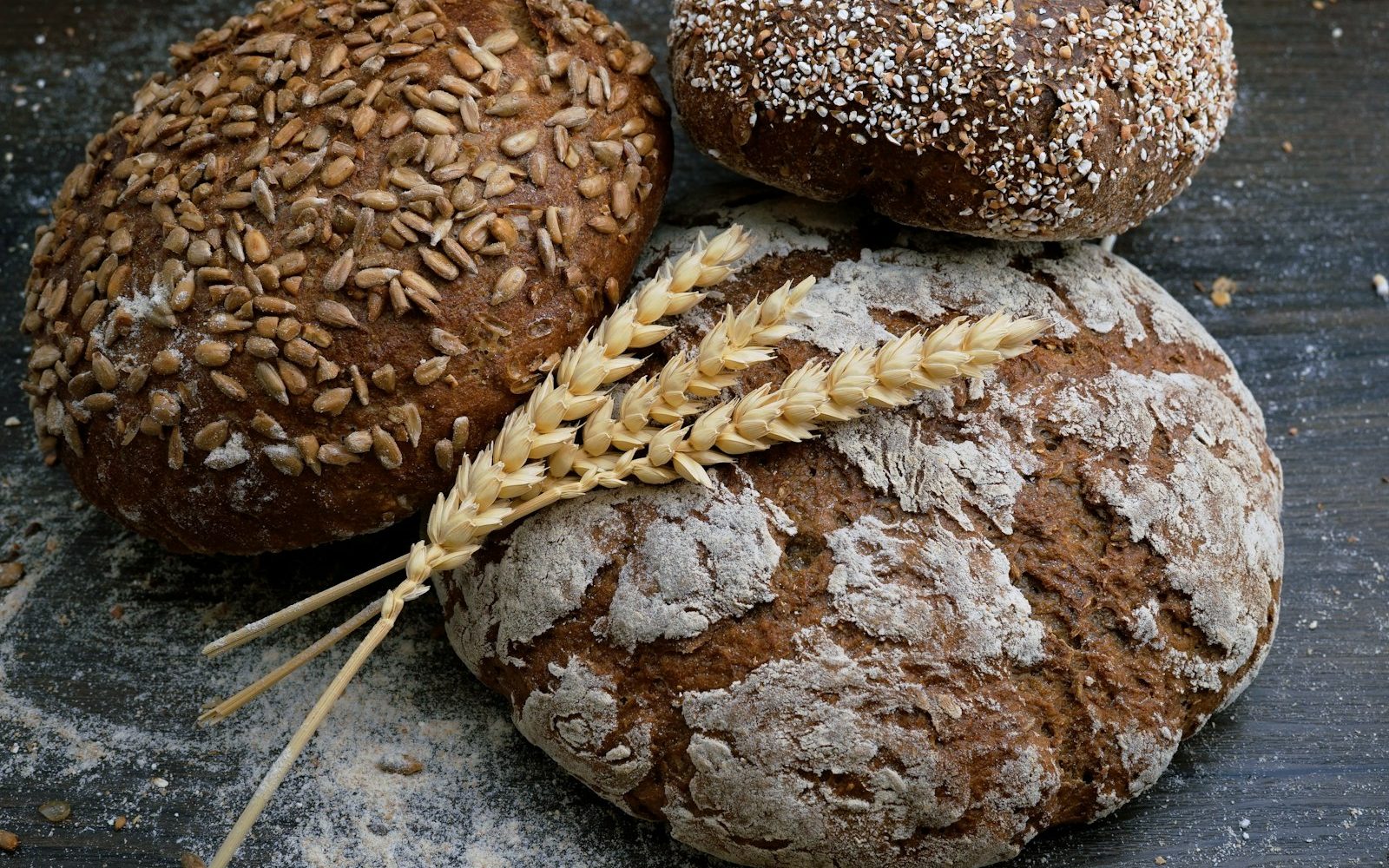
A simple Italian country bread, made with wheat flour and a sourdough starter (or a small amount of yeast), allowed a long rise, shaped into a round, and baked on a hot stone in a hot oven. The crust is dark, the crumb open, the flavour faintly tangy. A loaf keeps three to four days at room temperature, and what is not eaten fresh becomes bread soup or breadcrumbs.
The Indian roti
Unleavened. A small ball of whole wheat dough rolled thin and cooked on a hot griddle for under a minute. No fermentation, no waiting, no oven. Just flour, water, salt, and a hot pan. Made fresh for each meal in many households. A different relationship with time, but the same underlying simplicity.
The Moroccan khobz
A round, flat-ish wheat bread baked once a day, often in a communal oven the household carries the dough to in the morning and collects warm at midday. The texture is dense, slightly chewy, ideal for tearing and using to scoop tagine. Samira has described elsewhere how the bread carries the imprint of the baker’s hand even after baking.
The oven, the hearth, the shared loaf
Until quite recently, most households did not bake their own bread. They mixed and proved the dough at home, then carried it to a communal oven (a wood-fired stone chamber in the village square, in many parts of Europe, North Africa, and Western Asia). Each family’s loaf was marked, sometimes with a wooden stamp pressed into the surface before baking, so the baker could return the right loaves to the right households. Some of those stamps are still on display in regional museums, each one a small signature in dough.
The shared oven was a social institution as much as a culinary one. The baker knew the village. The village knew the baker. The day was organised, in part, around the time the bread was ready.
Most of those ovens have closed, replaced first by neighbourhood bakeries and then by supermarket bread aisles. Some, in small villages, are still in use. A few have reopened. The home oven, in any case, has become the inheritor of the practice, which is part of what makes the loaf on the cooling rack feel like a small connection to a much longer line of cooks.
What the finished loaf gives back
Bread made at home is rarely the easiest food in a busy week. It takes attention, even when most of that attention is just remembering that the dough is there. It takes a hot oven, a willingness to plan twelve or twenty-four hours ahead, and the patience to wait for the loaf to cool before cutting it (the inside is still finishing its cooking in the first hour out of the oven, which is why a hot-cut loaf is gummy and a cooled one is not).
What it gives back is harder to put into words. Part of it is taste. Part of it is the smell of the kitchen for the rest of the afternoon. Part of it is the small ritual of slicing the first piece, spreading butter, tearing off a corner for whoever wandered in. Like the patient rhythms of daily wellness routines, the bread is not really about the bread. The bread is about the household it sits inside.
The cloth is folded back over the bowl. Tomorrow there will be another one. There has been, for a very long time.