Full moon evenings: small household observances
In many houses the full moon still marks a small pause. A lamp lit early, a bowl of rice dumplings, a walk down the lane. A short field guide to keeping one at home.
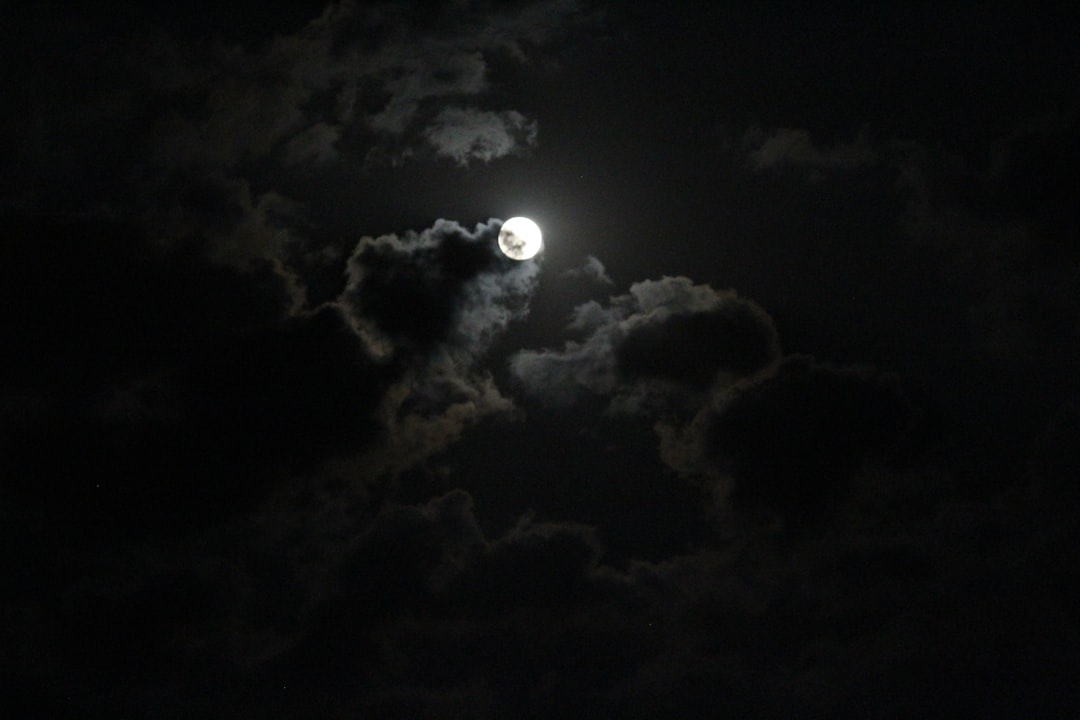
On the evening of Karthika Purnima my grandmother used to bathe by four in the afternoon, an hour earlier than any ordinary day. By the time the sky went from pale gold to that soft grey-blue of a South Indian dusk, she was in a clean cotton sari, hair still damp, lighting a small brass lamp at the threshold. The lamp was the size of a lime. She lit it with a cotton wick and one teaspoon of sesame oil. Then she stepped out into the lane to look for the moon.
This was not a festival exactly. It was a household observance, small and repeated, one of twelve or thirteen such evenings in a year.
The full moon has always been a domestic occasion in many places. Not always a temple day, not always a holiday. Often just a slight rearrangement of the ordinary evening: an earlier bath, a lighter meal, a lamp on the sill, a short walk after supper. What follows is a field note on a few of these customs, and a gentle way to keep one at home in a week that does not particularly want you to.
Purnima in an Indian house
In the Hindu lunar calendar each full moon has a name. Chaitra Purnima in spring, Vaishakha in early summer, Guru Purnima in the monsoon, Sharad Purnima in October when the harvest is in, Karthika in November when the light itself changes. Twelve of these in a common year, thirteen when an extra lunar month falls in. You can read more about the pattern in the Wikipedia entry on Purnima.
What people actually do at home varies by region and by household. In a Tamil Brahmin house I visited in Mylapore, the woman of the house set out a small silver tumbler of milk on the windowsill on Sharad Purnima night. The milk was meant to catch the moonlight until about ten, and then be drunk. In a Marathi household in Pune, the observance was simpler: the front door was left open a little longer than usual, and children were not scolded for staying out on the terrace.
Bathing early is the most consistent thread. Then a plain meal, often rice with a little ghee, curds, a vegetable. Then the lamp. Then, if the weather allows, a short walk. Not far. Just to the end of the lane and back, so the moon has been seen from open sky and not only through a window. This kind of slow attention has its own long history, and there is something of a quiet return to sky-watching going on in cities now, among people who never grew up with it.
Tsukimi in Japan
The Japanese observance is called tsukimi, literally moon-viewing. It centres on the fifteenth night of the eighth lunar month, which usually lands in mid-September, sometimes early October. Older households set out a low wooden tray on a veranda or a windowsill facing east. On the tray: a small vase of pampas grass (susuki, Miscanthus sinensis), and 15 small round rice dumplings called tsukimi dango, stacked in a neat pyramid of 9 on the bottom, then 4, then 2. The number 15 is not accidental.
The pampas grass is chosen for a specific reason. It resembles the rice plant at harvest, which is not yet ready in mid-September, and stands in as a wish for a good crop. The dumplings are white, plain, made from about 200 grams of rice flour kneaded with warm water. Some households add a plate of chestnuts or taro, which is why the harvest moon is sometimes called imo-meigetsu, the potato moon. The Wikipedia article on Tsukimi is a good starting place.
In Kyoto some old inns still hold a very short poetry evening on tsukimi night. People sit on a wooden step, drink one small cup of sake, look at the moon over the low tile roofs, and then go to bed. That is the whole event.
Moon-tea in Iran, moon-walks in rural Europe
In Isfahan and Shiraz, some families still hold what an older aunt called a moon-tea, a small gathering on a summer full-moon evening on the flat roof or the courtyard. The samovar goes up around nine. The tea is black, brewed strong, poured through a nabat (rock sugar) into small istikan glasses. A plate of watermelon slices, a bowl of cucumber, sometimes a little cheese. Nobody quite calls it a ritual. It is just what one does when the moon is full and the summer roof is cool.
“On the full moon we would carry the samovar upstairs and stay until midnight. The tea tasted different up there. My mother said the moon was in the sugar.” (overheard in a Shiraz household kitchen)
In rural Europe the older customs are patchier and often half-forgotten. In parts of Brittany, older folk once walked around a field or an orchard on the night of the full moon closest to the equinox, said to help the trees. In the Alpine valleys of northern Italy some households still turn the cheeses in the cellar on the full moon, a habit that has more to do with an easy monthly interval than with the moon itself. In Andalusia the whitewashing of walls is sometimes timed for the days after a full moon, when the lime is said to set cleaner. Whether any of this holds up chemically is another matter. The point is that the moon gave a shared calendar in villages where nobody owned a wall clock.
A small observance for a modern week
The full moon usually falls on a Tuesday or a Thursday, not a Sunday. You will have work the next morning. This is fine. The old observances were not built for leisure. Here is a version that fits a working evening in about 40 minutes.
- Look up moonrise in your city. It shifts by roughly 50 minutes each night. On the full moon it is close to sunset.
- Bathe 30 to 60 minutes earlier than you usually would. Wash your feet at the very least.
- Cook a plain, warm meal. Rice with ghee and salt. Or a plain broth. Nothing heavy, nothing fried.
- At dusk, light one small oil lamp or a beeswax candle at a window facing east. One teaspoon of oil, one cotton wick, is enough. It should burn about 2 hours.
- After supper, step outside for 10 to 15 minutes. Around the block, up to the terrace, into the garden. Look for the moon once, without a phone.
- Come back in. Sit for 5 minutes without speaking. Then read for a little while, or go to bed.
A short comparison
| Tradition | Central object | Time of night |
|---|---|---|
| Purnima (India) | Oil lamp at threshold, plain meal | Dusk to about 10 pm |
| Tsukimi (Japan) | 15 rice dumplings and pampas grass | 7 pm to bedtime |
| Moon-tea (Iran) | Samovar on the roof, rock sugar | 9 pm to midnight |
| Village walk (Europe) | Orchard or field circuit | Just after moonrise |
What can go wrong, and what to do
The lamp will sometimes gutter, especially in a house with an overhead fan or an open window in a coastal town. Move it 30 centimetres inward, or place it inside a plain glass tumbler. The dumplings will crack if the rice-flour dough is too dry: add water a teaspoon at a time. If you forget the moon altogether and remember at 11 pm, step out on the balcony anyway. The old people were forgiving about this. The month has thirteen chances if the year is generous, twelve if it is not. Attention returns.
Any small observance held over years becomes something else. Not a ritual exactly. A habit of noticing. If you already keep the solstice with a small quiet ritual, the monthly full moon fits alongside it without much effort. On rainy nights, when the moon stays hidden, some households still sit for a few minutes by the window, listening to the rain, and count that as the observance for the month.