A cast iron pan, seasoned over years
On the Indian lohe ki kadai, the Japanese tetsu-nabe, the American Lodge skillet, and the slow black patina that only years of cooking can build.
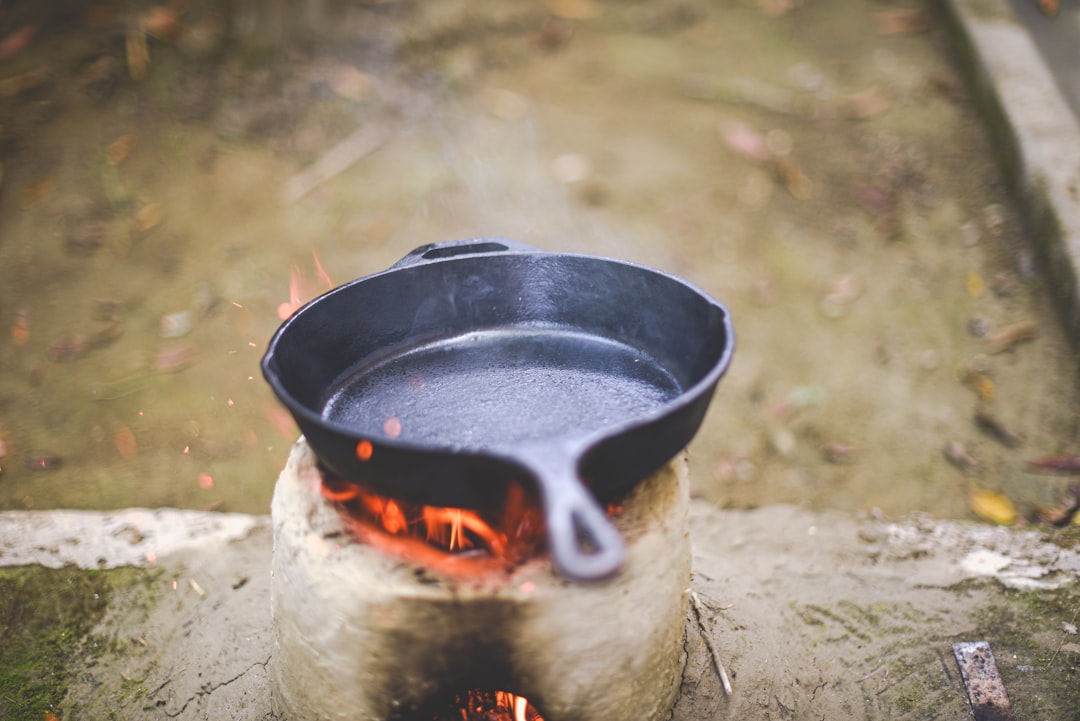
In my aunt’s kitchen in Pune there is a black cast iron kadai that has been in the house since before I was born. It sits on the back left burner, upside down, on a folded square of newspaper. The bottom is the colour of wet ink. The inside is the colour of wet ink too, but with a faint sheen, as though someone had rubbed it once with a piece of silk and forgotten to wipe it off.
My aunt does not scrub it. She wipes it with a hot cloth, sometimes with a pinch of coarse salt, and slides it back onto the burner for thirty seconds to dry. That is the whole ritual. The pan is 34 years old.
The Indians call this vessel a lohe ki kadai, a hemispherical pan hammered from a single sheet of black iron. The Japanese have their tetsu-nabe, flat-bottomed and heavier, sometimes cast at the old foundries of Iwate. The Americans have their skillets, most famously the Lodge pans poured in South Pittsburg, Tennessee, since 1896. The French call the shallow round baking dish a tourtière, though the word also names the pie that goes into it. Different shapes, one common substance: iron heated in a mould until it flows, then let cool slowly into a black grey wall that will outlive its buyer.
What you are actually buying
A good Indian kadai from a hardware bazaar in Chennai or Old Delhi costs between Rs 800 and Rs 1,200 for a 26 cm pan of hammered iron. A Lodge 10-inch skillet in an American supermarket costs $30 to $40. The heavier French and Japanese pans go higher, sometimes $80 or more, and the small hand-hammered pans from workshops in Morihoka can cross a hundred dollars. Weight is the first honest signal. A 26 cm kadai should feel like it wants to pull your wrist down. If it does not, the iron is thin, and thin iron warps.
The second signal is the finish. New pans are usually sold either bare (a matte pewter grey) or pre-seasoned (a thin, uneven, matte black). Bare pans need to be seasoned at home before they cook. Pre-seasoned pans can be cooked in immediately, but they still want a few rounds of oil in the first month to build a proper skin.
The seasoning ritual
Seasoning is not a coating you buy at the store. It is a chemistry that happens on the pan itself, when a very thin layer of oil is heated past its smoke point and polymerises into a hard, black, slightly slick film. It is closer to a lacquer than a grease. It takes 3 to 4 rounds to lay down the first honest skin, and years of use to bring it to the mirror black of my aunt’s kadai.
The method, learned in most Indian kitchens and confirmed by any American skillet forum:
- Wash the new pan in hot water with a stiff brush. Dry it on a low flame for 2 minutes until every drop is gone.
- Rub half a teaspoon of a high smoke-point oil (mustard oil in India, groundnut oil widely, flaxseed or grapeseed in the West) into every surface with a folded cotton cloth. Then take a fresh cloth and wipe as if you were trying to take the oil back off. This second wipe is the whole trick. Too much oil turns sticky.
- Set the pan upside down in a cold oven with a tray below to catch drips. Bring the oven to 220 C (about 425 F) and hold it for one hour. Turn it off. Let the pan cool inside until you can touch it, another hour at least.
- Repeat the oil-and-bake cycle 3 or 4 times. On the fourth round the pan will look uniformly matte black and feel dry to the touch, not tacky.
If you do not have an oven, the stovetop method works too, and is how the old kadai-wallas have always done it. Heat the pan on a low flame, wipe in a smear of oil, wait until it stops smoking, wipe again, repeat. It takes twenty minutes and one shirt you were going to throw out anyway.
What to cook first, and what to keep away
The first week of a new pan is not the week for tomatoes. Long acidic simmers, tomato gravies, tamarind rasams, vinegar reductions, will strip the young seasoning right off and leave the food tasting faintly of pond. Save them for month three or four, when the pan has some armour.
Cook fatty and dry things first. In Indian houses the honest opener is a bhaji of onions and green chillies in a spoon of ghee, or dry-roasting a cup of peanuts until their skins split. In America the classic first fry is bacon, or a cornbread baked with lard. In a Kyoto kitchen it might be a shallow pan-fry of tofu dredged in potato starch. What they share is fat, heat, and no long wet contact. Every fry adds a whisper of oil to the seasoning, and the black deepens.
“You do not teach an iron pan. You feed it.” (overheard at a hardware shop in Sowcarpet, Chennai, from an old man wrapping a new kadai in newspaper)
The list of what to never do is short and worth taping to the wall.
The patina, and the years
What you are building, over months and years, is called a patina. It is the accumulated polymerised oil of every meal that has passed through the pan. In the first month it is thin, dull, and easily marked. By month six it is smoother and darker, and eggs begin to slide. By year three it is a proper black glass. My aunt’s pan, at 34 years, is a mirror. You can see a smear of your own face in the bottom if the light is right.
Patina is one of those slow domestic accomplishments that does not fit the modern calendar. It belongs to the same family of practices as earthenware cooking, where the clay drinks and holds the flavour of years of dal, or the long fermentations of simple sourdough bread, where the starter itself becomes an heirloom. A cast iron pan is, in the same sense, a slow object. You cannot buy year three. You can only cook your way to it.
Care after each use
| Step | What to do | Time |
|---|---|---|
| 1 | Scrape food off with a wooden spatula while still warm. | 30 seconds |
| 2 | Rinse with hot water. Use a pinch of coarse salt as a scrubber if needed. No soap in the first year. | 1 minute |
| 3 | Dry on a low flame until every trace of water is gone. | 2 minutes |
| 4 | Rub a quarter teaspoon of oil across the cooking surface with a cloth. Wipe most of it off. | 20 seconds |
| 5 | Store upside down on a folded cloth or newspaper, away from steam. | — |
The whole routine takes under five minutes, and it is what the pan is asking for. Skip the flame-dry step in a humid coastal kitchen, on the Konkan coast for instance, and you will find a bloom of orange rust the next morning. This is not tragedy. Scour it out with salt and oil, re-season the patch, keep going. Iron forgives almost anything except neglect.
Read the Wikipedia article on cast iron cookware for the metallurgy, and the Lodge care notes for a foundry’s own instructions. Both will confirm what your grandmother already told you.
There is a particular pleasure in a pan that has been fed for a decade. It heats evenly, it releases food cleanly, it stays honest under a high flame that would warp a nonstick in a week. It carries, faintly, the smell of everything it has cooked. This is the same pleasure I find in a slow-cooked pot that has been kept warm for hours, the pleasure of a domestic object that has aged into itself. Iron rewards patience. It asks little, in return, and it will still be black and slick in your daughter’s kitchen.