Rose petal tea: the gentlest of brews
On the pale rose-pink cup made from dried petals, and the gardens and households across Persia, Bulgaria, and India that have kept it.
A small ceramic jar in my mother-in-law’s kitchen in Kyoto holds dried rose petals from her sister’s garden in Yamanashi. They were gathered in early June, when the heat of the day had not yet settled and the dew was still on them. The petals are pale pink, faintly papery, with the slightly sweet, slightly green scent that fresh rose has just before its full opening. She makes a cup of rose tea from them perhaps once a month, no more.
Rose petal tea is among the quietest of brews. It does not have the wide history of green or black tea. It does not have the regional variation of chai or mint tea. But across several specific cultures (Persian, Bulgarian, Indian, Chinese, Moroccan), it has been a domestic drink for a long time, valued less for any single property and more for its connection to the garden and to the cycle of the year.
Which rose to use
The roses most often used in tea are Damask roses (Rosa damascena), Provence or cabbage roses (Rosa centifolia), or the wild dog rose (Rosa canina). All three have a strong, distinctly rose-like fragrance, unlike many modern garden hybrids which have been bred for colour or shape and have lost most of their scent.
This matters. A rose with no smell will make a tea with no character. The petals of a scentless hybrid will give a pale, slightly tannic brew that does not taste like rose. The first test of any rose intended for tea is to smell it. If the petals do not smell like rose to your nose, they will not taste like rose in the cup.
The drying
The traditional method is unhurried. Petals are gathered in the early morning, after the dew has dried but before the day is hot. They are gently rinsed if needed, then spread in a single layer on clean cotton or paper in a dark, airy place. Direct sun is avoided because it bleaches the colour and weakens the scent. The petals are turned every few days. They dry slowly, in about a week to ten days.
Once fully dry (they should crackle slightly when crushed), the petals are stored in a glass jar, away from light and heat. A jar of properly dried petals from June can keep its scent until well into the following winter, though it fades after about a year.
“In Isfahan, the rose petals are gathered before sunrise. The garden is silent. The people gathering are silent. The roses themselves are not silent, but you have to be quiet to hear them.” (a note recorded from an Iranian rose grower, 2017)
The cup itself
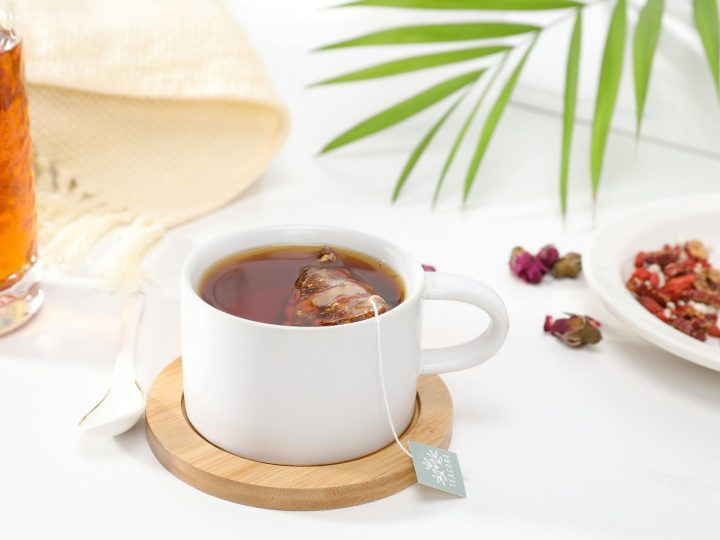
The standard method is gentle. A tablespoon of dried petals is placed in a small teapot. Water that has come to a boil and rested for a minute (so it is not at full temperature) is poured over them. The pot is covered. The petals steep for five to seven minutes. The result is a very pale pink or pale gold cup, depending on the rose variety, with a soft, delicate, slightly sweet aroma.
It is not a strong tea. Some new drinkers are disappointed by how subtle it is. The point, however, is the subtlety. Rose petal tea is meant to be a quiet drink. It will not announce itself the way ginger or mint does. It will sit in the corner of the cup and ask to be noticed.
What it pairs with
The traditional pairings are small and sweet. A small piece of cardamom shortbread in Persian households. A spoon of rose petal jam, with a tiny piece of bread, in Bulgarian Black Sea villages. A few pistachios in the Levant. In China, rose petal tea is sometimes paired with osmanthus or jasmine blends, the fragrant flowers complementing each other rather than competing.
For readers who follow our notes on seasonal living, rose tea is one of the few flower-based drinks that suits multiple seasons. Cold-brewed in summer, it is a clean, refreshing alternative to plain water. Hot in winter, sweetened lightly with honey, it is one of the gentler evening cups, particularly for people who find chamomile too sweet or too strong.
Regional differences
In Persia, rose petal tea is often combined with green or black tea, a small amount of dried petals added to the pot to give a subtle floral note. The tea on its own, made only with petals, is more often a household drink than a guest one. In Bulgaria, particularly in the Rose Valley near Kazanlak where attar of roses is produced, the petals are sometimes simmered briefly with a small amount of honey to make a richer, syrupy version.
In India, especially in the gulkand-making households of north India and Pakistan, rose petals are more often preserved in sugar than dried for tea. The gulkand (rose petal jam) is then stirred into milk or warm water, giving a different drink with a thicker mouthfeel and a more candied flavour.
The blends
Rose pairs unusually well with other gentle ingredients. A small amount of dried rose with green tea makes a delicate afternoon cup. Rose with chamomile gives an evening blend that is softer than either alone. Rose with cardamom (a half teaspoon of crushed cardamom and a tablespoon of rose petals per pot) is a Persian-influenced combination that is particularly nice in cool autumn mornings.
The drink also blends well with milk. A small handful of dried rose petals simmered in warm milk, with a teaspoon of honey and a pinch of cardamom, gives a pale pink cup that some Indian households make in the way others make turmeric milk. It is a softer, more floral version of the same evening idea.
The garden and the cup
One of the small reasons rose tea has lasted is that it connects to a specific place in a way that most teas do not. A cup of black tea may have travelled from a plantation thousands of kilometres away. A cup of rose petal tea, in many households, came from a specific bush in the garden or in a neighbour’s garden. The gathering is part of the drinking.
This makes it one of the more personal members of our herbal drinks family. The petals in the jar are not anonymous. They came from somewhere specific. The cup, in some way, holds that place.
A quiet word of care
Rose petal tea is broadly very gentle and is given freely in most household traditions, but anyone pregnant, on regular medication, or with allergies to flowers in general will reasonably want to speak with a qualified practitioner before making it a daily habit. As always, the recommendation is courtesy more than concern.
The ceramic jar in the kitchen, when its petals are finished, is washed and stored away until the next June. The garden, outside, is dormant for now. The next batch is a year away, and the slow timing is part of what makes the drink what it is.
Can I make rose petal tea from any rose?
Are rose petals from the florist safe to use?
How long does dried rose petal tea keep?
The teapot is empty. The jar, on the shelf, has a few months of petals left. The garden, in the meantime, is sleeping.