Triphala: three fruits in a household jar
A cultural portrait of triphala, the simple powder of three dried fruits that has lived in Indian household cupboards for centuries.
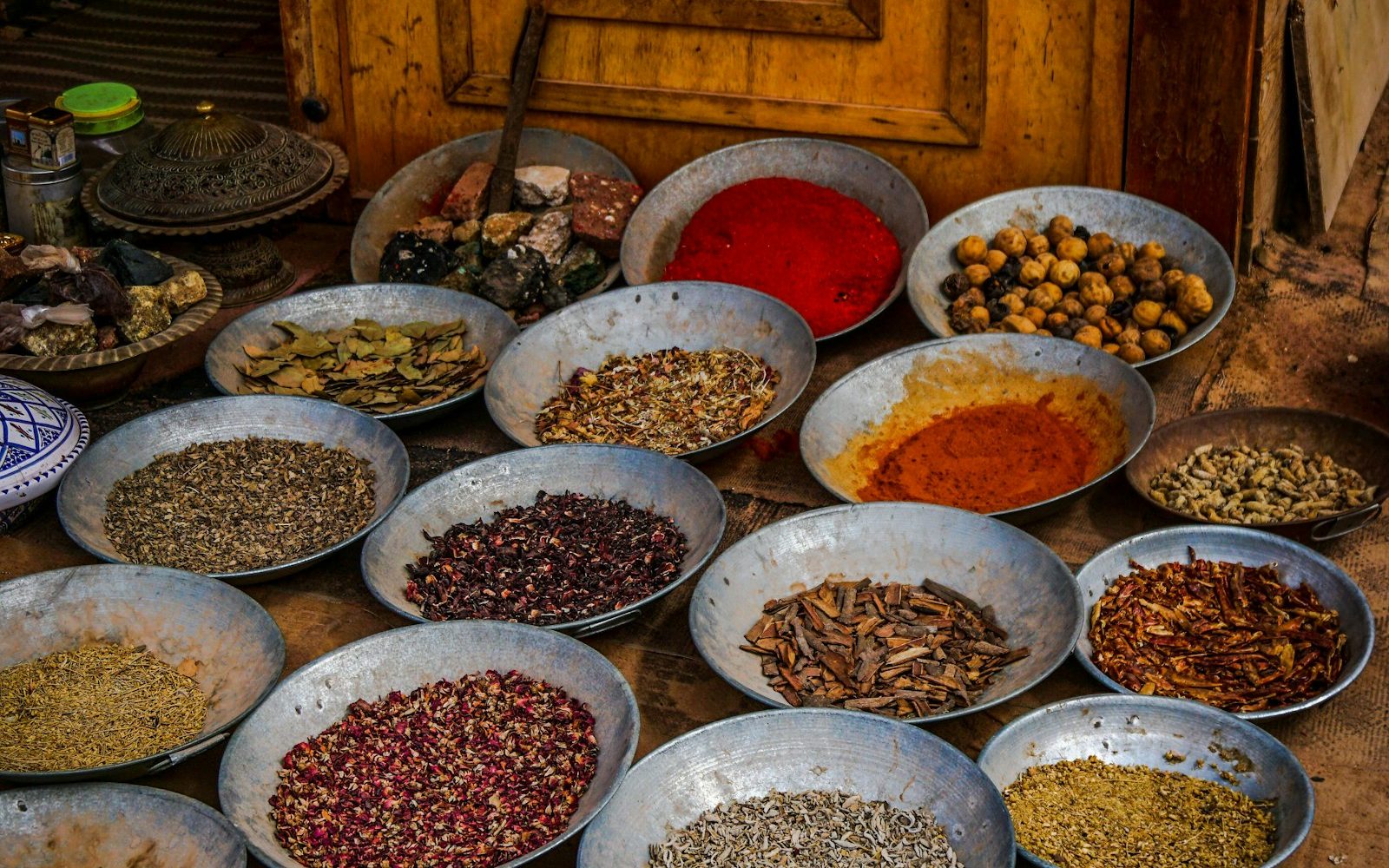
In the corner cupboard of my parents’ kitchen in Bangalore, behind the asafoetida and the dried curry leaves, there is a small steel jar that has stood there longer than I have been alive. The label, written in my grandmother’s handwriting, simply says triphala. Inside is a fine, brown powder that smells faintly like a forest floor after rain. My mother takes a half teaspoon of it some evenings, stirred into warm water. She does not make a ceremony of it. It is just there, the way other people keep a tin of bicarbonate of soda.
Triphala is one of the most recognisable formulations in Ayurveda, but among Indian households it lives a quieter life than the wellness market would suggest. It is not a miracle product. It is a household staple, the kind of thing a grandmother keeps because her own grandmother kept it. The story is worth telling in that register, gently, without claims.
What the word actually means
Triphala is a Sanskrit compound. Tri means three. Phala means fruit. The three fruits in question are amalaki (Indian gooseberry), bibhitaki, and haritaki, all of them native to the subcontinent and all of them dried, ground, and combined in roughly equal parts. The recipe appears in some of the older Ayurvedic texts, including writing attributed to Charaka and Sushruta.
The three fruits are described in classical Ayurveda as having different qualities, and the combination is meant to balance one against another. Amalaki is associated with cooling and sourness, haritaki with a warmer, gathering quality, and bibhitaki with an astringent, drying note. The whole, in the old language, is considered to suit most people because no single quality dominates.
A note before we go on
What follows is cultural and historical, not medical. Ayurveda is a long, regional tradition. Triphala is not a treatment for any specific condition, and this article is not advice to take it. If you are pregnant, on medication, very young, very old, or living with a specific health concern, the right step is to speak with your doctor and a qualified Ayurvedic practitioner before adding any new herb to your routine. The point of writing about it here is to share where the tradition sits, not to recommend an action.
How it actually lives in a kitchen
In a Tamil or Kannadiga household, triphala usually sits in a small jar near the other powders. It is not consumed daily by most people. Some take it occasionally in cooler months. Some keep it in the cupboard for years without touching it, the way a Mediterranean kitchen might keep dried mint. The form is usually a fine powder, sometimes a tablet in city households, and very occasionally a slow decoction.
The taste, for the uninitiated, is striking. It is bitter, sour, and astringent at the same time, with a faint sweetness if the amalaki is good. Most people stir it into warm water and drink it down without lingering, the way you might take a strong herbal tisane. It is rarely added to food, because the taste does not flatter any dish.
“A good triphala jar tastes like a forest. A great one tastes like a forest after rain.”
The cultural setting
To understand why triphala has survived for centuries in Indian households, it helps to look at the broader picture of how the cupboard is treated. Many Indian kitchens keep a small set of long-shelf-life powders and dried things that move in and out of use as the seasons turn. Some are culinary. Some are closer to traditional remedies. The line between the two is softer than in Western kitchens.
Triphala sits on that line. It is not a daily food and not a sharply medicinal item. It is more like an old friend whose role is informal. The same household will likely keep ghee in the traditional kitchen for cooking and a small bag of Ayurvedic spices on the shelf nearby. Triphala is one of those companion items, holding its corner for whoever needs it.
The three fruits, briefly
Amalaki
The Indian gooseberry, amalaki or amla, is a small, pale-green, very sour fruit that ripens in autumn across many parts of India. Fresh, it puckers the mouth. Dried and powdered, it carries that same sourness in a softer form. Amalaki appears in countless Ayurvedic preparations and in regional pickles and chutneys outside the strictly Ayurvedic context.
Bibhitaki and haritaki
Bibhitaki and haritaki are tree fruits that look superficially similar when dried, both with a wrinkled brown skin and a hard inner seed. In older Indian villages, the trees themselves were known by sight, and elders could often tell which was which by smell alone. The powders of both have a strong astringent quality.
Why it has lasted
Old household items survive because they are useful and forgiving. Triphala has lasted partly for cultural reasons (it is mentioned in widely read Sanskrit texts), partly for practical ones (the dried form keeps for a long time in a humid climate), and partly because it is genuinely woven into the way Indian households think about the cupboard.
If you are exploring this corner of Ayurveda, the more interesting question is not whether to buy a triphala jar, but how the broader cultural pattern of a slow, well-stocked cupboard might fit into your life. There are useful neighbouring ideas in our daily wellness routines section and in pieces on the slow cup, the slow plate, and the quiet afternoon.
A small piece of a larger room
Triphala is best understood as one small piece of a larger Ayurvedic room. The room itself includes warm food, steady hours, careful drinks, gentle oil, and quiet evenings. Without the room, a single powder will not carry much weight. With the room, it becomes one ordinary item among many, the way salt is in another kitchen.
That is the version of triphala I grew up with. A steel jar in a cupboard. My mother’s voice asking my grandmother where it had gone. The faint smell of the forest after rain. Whatever else it might be, it is, before anything, a household memory.
The most useful things in an Indian kitchen are often the quietest. Triphala is among them.