Barefoot on morning grass: an old five-minute habit
Standing barefoot on dew-covered grass for five to ten minutes after sunrise is a quiet, unhurried practice found in Indian dinacharya, Japanese courtyard gardens, and Iranian dawn walks.
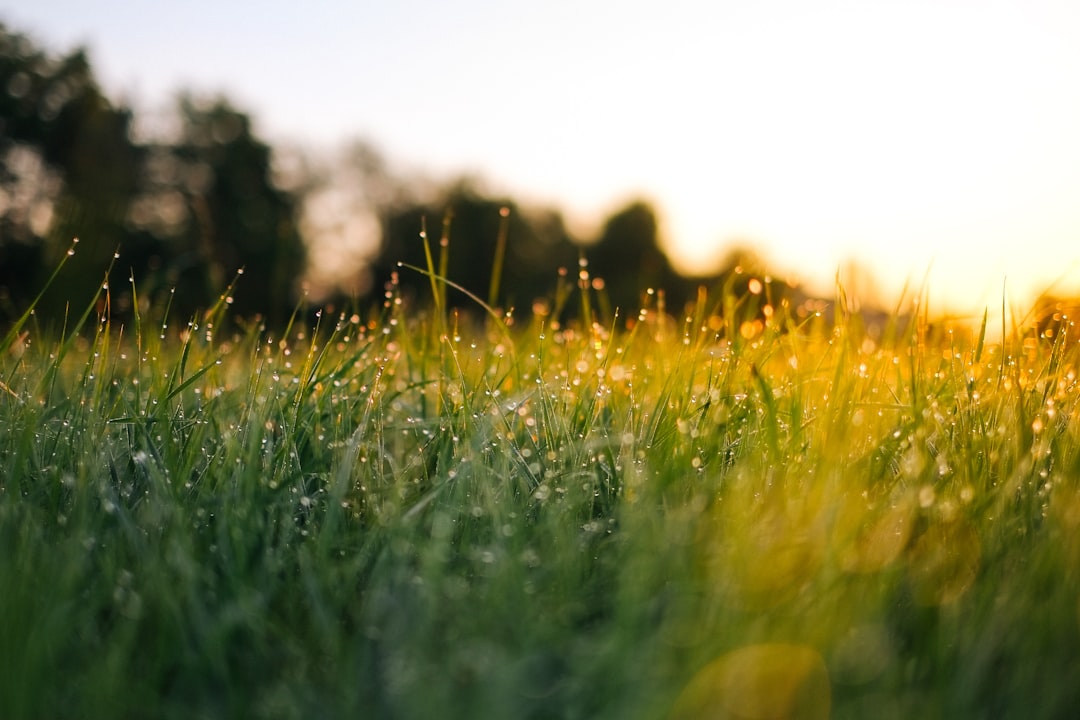
The grass behind my aunt’s house in Belgaum is cut short, almost like a cricket pitch, and in October it wakes up wet. Not soaked, just cool and beaded, the way a cold glass sweats. She wakes at 5:40, brushes her teeth, drinks a small brass tumbler of warm water, and walks out in a cotton sari to stand on that grass for eight minutes. Sometimes she paces slowly, ten steps forward, ten steps back. Sometimes she just stands, watching the neem tree at the edge of the compound.
She calls it padabhyanga on the earth, which is not quite the classical meaning, but she is not a Sanskrit scholar. She is a retired schoolteacher who has done this every clear morning for forty-one years.
The practice has many names and no single owner. In Ayurvedic dinacharya, the daily rhythm, contact with cool earth in the first hour after sunrise is part of the sequence that follows oral care and precedes bathing. In Japan, the wider practice of shinrin-yoku, forest bathing, is not the same thing but shares a nervous-system logic: unhurried outdoor contact, senses open, no phone. In Iran, the old dawn-garden tradition of Shiraz and Kashan involved sitting or walking in a walled bagh before the sun climbed above the cypresses. In each case, the point is not exercise. The point is a small, boring pause between sleep and the day.
Why the first hour after sunrise
The grass is at its coolest and wettest in the window between roughly 5:30 and 7:00, depending on your latitude and season. Dew forms overnight when the ground radiates heat to a clear sky and the air near the blades drops below its dew point. By the time the sun is a hand’s-breadth above the horizon, the blades hold a thin film of water at somewhere between 12 and 18 degrees Celsius in a temperate autumn morning, colder in November, warmer in July. The temperature contrast between your foot (around 30 degrees at the sole) and the wet grass is the whole point. Your skin registers the difference as a small, sharp signal. You wake up in a way coffee does not accomplish.
The Wikipedia entry on dinacharya places the outdoor waking practice within a longer sequence that includes tongue scraping, warm water, and oil application. Most households I know shortcut it. The grass part, five to ten minutes, is often what survives when the rest of the routine falls away.
What to notice
The first thirty seconds are usually the most interesting. Your feet complain a little. The cold reads as a mild ache along the arches. Then the ache flattens into a kind of alertness. If you keep still, you begin to notice smaller things: the wet cling of a blade of grass between two toes, the slight give of the soil underneath, an ant working across the top of your foot.
My uncle, who used to farm sugarcane outside Kolhapur, taught me to walk heel-first, then roll onto the ball of the foot, taking about two seconds per step. He said his father had told him that a fast walk on wet grass was for children and dogs. Adults, he said, should walk as though carrying a small clay pot on the head.
“The dew is not a bath. It is a hello.” (overheard at a courtyard in Pune, from an old woman watering her tulsi)
What you are practicing, without needing to name it, is a five-minute recalibration. The nervous system moves from indoor to outdoor. The eyes get a wash of natural morning light, which is a stronger cue for circadian rhythm than any lamp indoors. The soles of the feet, which have roughly 200,000 sensory receptors, get more input in these few minutes than they will get through a whole day of socks and shoes.
A five-to-ten-minute shape
- Minutes 0 to 1: Step onto the grass. Stand still. Let the initial cold do its work. Look at one thing that is not a screen: a tree, a bird, a rooftop line.
- Minutes 1 to 3: Begin slow walking. Ten steps in one direction, turn, ten steps back. Roll heel to ball. About two seconds per step.
- Minutes 3 to 6: Stop again. Breathe through the nose for six long breaths, four counts in, six counts out. Notice the temperature at the arches of the feet compared to the tops.
- Minutes 6 to 9: Optionally add a very gentle set of sun salutations, or simply sway from side to side. Keep the feet on the grass.
- Minute 10: Step off. Dry your feet on a rough cotton cloth. Go inside. If you are following the older sequence, this is when the warm water and small kettle come out.
Traditions, briefly
The Indian version usually happens in a courtyard, a small back garden, or a rooftop with a strip of grass. In Kerala, families with larger compounds sometimes walk on the packed earth near a well rather than on grass, because the ground there stays cool through the morning. In Konkan villages, older women walk on damp coconut-husk matting laid over red laterite soil. The material varies. The idea does not.
In Japan, shinrin-yoku as codified by the Forestry Agency in the 1980s is a forest practice, longer and further from the house. But the domestic cousin, an early-morning stand in a small tsuboniwa courtyard garden, is old and quiet and less studied. In Kyoto machiya houses you sometimes see a two-metre square of moss with a stepping stone, and the stone is placed exactly so a person can stand on the cool moss with both feet before returning indoors.
The Iranian dawn gardens of Shiraz, some of them attached to Safavid-era pavilions, were designed for a slow morning walk on gravel paths between narrow water channels, the jubes. The feet were not always bare. But the intent, unhurried contact with cool ground before the day’s heat, is recognisable.
When to skip
There is a small honest list of times not to do this.
| Condition | Why to skip or adapt |
|---|---|
| Ground frost or grass below about 4 degrees Celsius | Cold at that level is not bracing, it is painful, and the feet lose sensation quickly. |
| Any open cut, blister, or fungal patch on the sole | Wet grass carries soil bacteria. Cover the foot and wait a week. |
| Slippery slope or wet stone edge nearby | Wet grass on a slope of more than about 10 degrees is a fall risk, especially for older knees. |
| Recently treated lawn (weedkiller, fungicide) in the last 3 weeks | Chemical residues sit on the blades and transfer to skin. |
| Diabetic neuropathy or reduced foot sensation | You may not feel a small stone or thorn. Ask a doctor first. |
How to tell if it is working
You will not feel dramatic. You should feel awake without the tight-jaw feeling of a strong coffee. If after two weeks of steady mornings you notice you are reaching for the phone later, sleeping a little earlier, or simply enjoying the ten minutes as its own quiet thing, that is the practice doing what it does. If instead you feel cold for an hour afterwards, shorten to four minutes and dry the feet more thoroughly.
My aunt, when asked, does not talk about circadian light or thermal contrast. She says the grass tells her whether the day will be hot or gentle. She is usually right within a degree or two.
Common questions
Do I need real dew, or is watered grass fine?
Watered grass works. The point is cool, wet contact, and a lawn hosed the night before behaves almost identically to dew-covered grass at 6 a.m. Real dew has a slightly different, thinner film and the ground below is cooler, but this is not a competition. In a dry Delhi October, most households simply water the strip the evening before.
Can I do this on a balcony with potted grass or a small mat of turf?
Yes, and many apartment dwellers do. A shallow tray, about 40 by 60 centimetres, of nursery-grown lawn grass, watered the night before, gives you enough surface for two feet. It is not the same as an open courtyard, but the cool-wet-contact part transfers.
Is there a best month to start?
Autumn and late spring are the friendliest, because morning temperatures sit in a comfortable 14 to 22 degree range. Starting in the middle of winter is possible but harder on unaccustomed feet. Starting in monsoon means you deal with muddy grass, which is a different pleasure.
What about walking on sand or wet stone instead?
Both work in their own way. Wet sand at the tide line gives a similar cool contrast but is coarser on the sole. Cool stone, like the granite paving of an old Karnataka temple courtyard at 6 a.m., is closer to the Japanese moss-and-stone version. Grass is simply the most available option in most homes with a garden.
Should I do anything special afterwards?
Dry the feet with a rough cotton cloth, not a soft towel, and put on cotton socks if the house is cool. Some households rub a few drops of warm sesame or coconut oil into the soles before socks. Then move into the rest of the morning: warm water, breakfast, the day.