Garshana: the old Ayurvedic dry brush before the bath
A pair of raw silk gloves, four quiet minutes before the bath, and a small door in the Ayurvedic morning that opens into the day.
In a small flat in Pune, an aunt of mine keeps a pair of raw silk gloves folded inside a wooden box on her dressing table. The box is lined with an old cotton handkerchief. The gloves are the colour of unbleached wheat, a little rough to the touch, the seams thick where the silk has been double-stitched at the wrist. Every morning, before her bath and after her cup of hot water with lemon, she puts them on and rubs her arms and legs in short, brisk circles. The whole thing takes about four minutes. Then she oils, then she washes. This is garshana.
The word comes from Sanskrit, and in Ayurvedic dinacharya it names a specific step: a dry friction of the skin done before oil, before water, before the day begins in earnest. The classical texts describe it as a way of moving the lymph and waking the channels, called srotas, that carry fluid through the body. In practice it is a small, slightly scratchy ritual that leaves the skin pink and warm and oddly alert.
Where it sits in the morning
Ayurvedic tradition organises the early hours into a sequence, and garshana has a fixed place in it. You wake before sunrise, you scrape the tongue with a copper or steel scraper, you drink a glass of warm water, you go to the toilet, you brush the teeth. Then, before the oil massage, comes the dry brushing. Only after garshana do you move into abhyanga, the warm oil self-massage, and only after abhyanga into the bath.
The logic, as an old vaidya in Kerala once put it to a visitor, is that the friction opens the pores and lifts old, dead skin so the oil can actually sink in. If you skip the dry brush and pour oil onto a body that is still sluggish from sleep, the oil sits on the surface. Garshana is the small door that opens the door.
The full sequence of the morning, called dinacharya, has its own long rhythm and reasoning, and garshana is just one bead on that thread. But it is one of the easier beads to try, because it needs almost nothing.
What a “soft brush” actually is
The traditional tool is a pair of gloves, called garshana gloves, sewn from raw silk. Raw silk, sometimes labelled as noil or dupion, keeps the short, uneven fibres of the cocoon. It is not the smooth, slippery silk of a sari. It feels a little like fine sandpaper warmed by the hand. A good pair costs somewhere between 400 and 900 rupees in an Ayurvedic shop in India, or roughly 15 to 25 US dollars online.
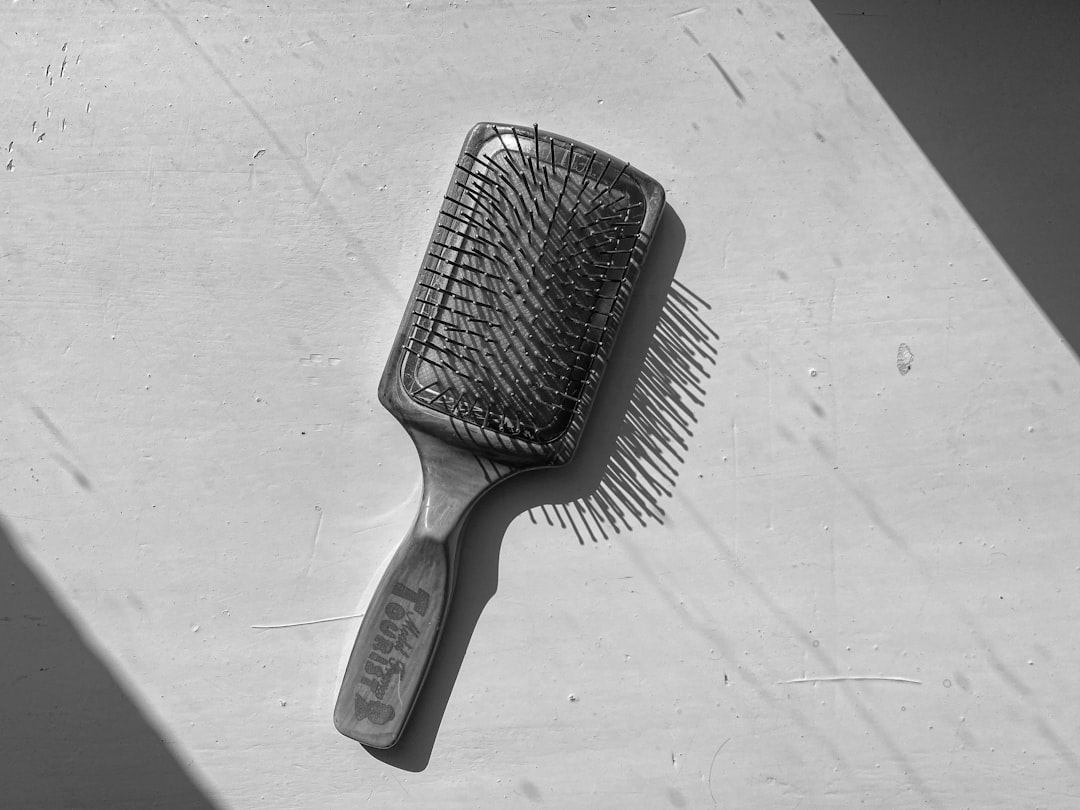
Some households, especially in the Konkan coast, use a small handful of chickpea flour, called besan, worked into a paste with a few drops of water and rubbed over the limbs instead. Others use a soft natural-bristle brush, the kind made of goat hair or tampico fibre from the agave plant. The bristles should bend easily when you press the brush against your forearm. If the brush leaves red streaks or hurts, it is the wrong brush.
The Western “dry brushing” trend usually reaches for a much stiffer brush, often boar bristle on a long wooden handle, and pushes hard. Garshana is quieter than that. The pressure is closer to what you would use on a ripe tomato: firm enough to move the skin, gentle enough not to bruise it.
“You are not sanding a table. You are waking a child. Slow at first, then a little faster.” (overheard at an Ayurvedic clinic kitchen, Thrissur)
How to do it
- Undress fully and stand on a mat or old towel. The skin flakes will fall, and you want to be able to shake the mat out over the sink afterward. Total time: 3 to 5 minutes.
- Start at the feet. Move up the legs in long strokes toward the hips. Always brush toward the heart, never away from it.
- Over the joints, switch to small circles. Ankles, knees, hips, wrists, elbows, shoulders each get about 10 to 15 circular passes.
- Move to the hands and arms. Start at the fingertips, brush up the arms toward the shoulders.
- Belly in a clockwise circle. Follow the path of the large intestine: up the right side, across under the ribs, down the left side. About 20 slow circles.
- Chest and upper back in gentle downward strokes toward the heart. Skip the nipples and the delicate skin at the throat.
- Finish, oil, then bathe. A warm shower or bucket bath around 10 to 15 minutes after the brushing lets the friction and the oil settle in.
The whole business, brushing and oiling and bathing together, takes about 25 to 30 minutes if you are unhurried. On the mornings when it does not, you can still do just the garshana in under 5 minutes and skip the rest.
When to skip it
Not every skin wants friction. Broken skin, a fresh burn, an active eczema or psoriasis flare, a sunburn, a rash, or shingles: leave the brush in its box. Over varicose veins, brush around them, not across them. If you are pregnant, especially in the first trimester, most classical practitioners will ask you to pause garshana altogether unless a vaidya you trust has looked at you and said otherwise, since the pressure on the belly and the movement of lymph are not neutral acts.
People with very dry skin sometimes find daily brushing makes them itch. The traditional adjustment is to reduce to 2 or 3 mornings a week, or to skip the brush and go straight to a gentle oil massage instead. In the peak of a north Indian summer, when the skin already feels hot and prickly, many households pause garshana until the monsoon breaks.
What it does, in plain terms
The old Sanskrit texts, including the chapters on dinacharya in the Ashtanga Hridaya, name a handful of effects: lightness, better circulation, reduction of what they call kapha stagnation, an easier movement of waste through the body. In more everyday language: the skin feels alive, the arms feel less heavy on cold mornings, the itch that comes from wearing wool all winter is less. Some people say their skin absorbs body oil and lotion more evenly after a few weeks of daily brushing. None of this is medical treatment. It is a habit, done for centuries, with modest and cumulative rewards.
The Western trend, which took hold in wellness magazines around 2015, borrowed the shape of garshana but often lost its softness and its context. A stiff brush, no oil after, no warm bath, and the whole thing done at 6 pm before bed is a different practice with a different result. It is not wrong, exactly. It is just not garshana.
A small note on the silk
Raw silk gloves last a surprisingly long time. My aunt’s are more than 12 years old. She washes them by hand every 2 or 3 weeks in cool water with a drop of mild soap, squeezes them gently, and dries them flat in the shade. Silk in the sun goes brittle and yellow. If a seam frays, she darns it with white cotton thread. When the fibres go completely smooth and stop catching on the skin, she buys a new pair and keeps the old ones for dusting the household shrine.
Can I use a loofah or a Japanese hemp cloth instead of silk gloves?
A hemp or ramie cloth, the kind sold in bathhouses in Kyoto, is closer in feel to raw silk than a loofah is. A loofah, especially a dry one, is far too rough for garshana and will scrape the skin. If you have neither silk nor hemp, a thin, worn cotton towel folded into a mitt is a better substitute than a loofah.
Do I do garshana every morning, or only some days?
Daily is the classical instruction, but 4 or 5 mornings a week is what most people actually manage. Miss a day and nothing bad happens. Skip a week and you notice the skin feels a little duller, a little slower to warm up in the morning.
Should I brush before or after I drink my morning water?
After. The traditional order is: toilet, warm water, tongue scraping, teeth, then garshana, then oil, then bath. Doing garshana on a stomach that has had a glass of warm water is said to help the movement of the belly circle.
Is it normal for the skin to feel itchy for a few days when I start?
A mild, brief itch as the skin adjusts is common in the first week. It usually settles. If the itch is sharp, or if red bumps appear, stop for a few days, use a lighter touch when you resume, and check that the silk or brush is not too stiff.
Does garshana help with cellulite the way Western dry brushing pages claim?
Ayurvedic texts do not use the word cellulite and do not promise its removal. Regular garshana followed by oil massage may leave the skin feeling firmer and more even over months, but there is no traditional or clinical claim of dissolving fat under the skin. Treat those claims with a raised eyebrow.